Why Does a Well Pump Cycle Every Few Minutes?
A pump that starts every few minutes may be reacting to a leak, a worn component, or a pressure-control problem not simply normal household use. A private well pump draws water from your own supply, unlike a municipal main, so the cause may be inside the well system or its plumbing. Start with these clues.
-
Private or public supply: Confirm whether your home uses a well or municipal water; that determines which equipment should be checked.
-
Impeller wear: A damaged well pump impeller may move less water, making the pump work harder without restoring steady service.
-
Signs of failure: Repeated cycling, fading flow, or unusual pump sounds help show how to tell if a well pump is failing; note when each symptom occurs.
Cold, snowy winters increase frozen-pipe risk, so keep an eye on exposed plumbing. Near Shelburne Museum, Vermont Plumbing Pros can trace the symptom through the pump system before recommending a repair.
What makes a well pump short cycle?
If the pump starts again soon after a faucet runs, the system may be losing usable pressure or failing to store enough water between cycles. Well pump short cycling means frequent starts and stops instead of longer, spaced-out runs. That pattern can wear the motor and leave less water available when several fixtures are used. A leak, a faulty control, or a pump that is no longer moving water properly can produce similar symptoms, so replacing a part based on the noise alone can miss the actual cause.
Our crew checks the well pump and controls together. Well pump amperage and voltage testing can show whether the motor is receiving appropriate power and drawing an unusual load; those measurements help narrow the diagnosis before parts are recommended.
At homes around Church Street Marketplace in Burlington, we have learned not to assume every pressure complaint comes from the same equipment. A sharp change in pump behavior matters. Record how often it starts and whether the pattern changes when water is not being used.
Can the pump or its parts be the cause?
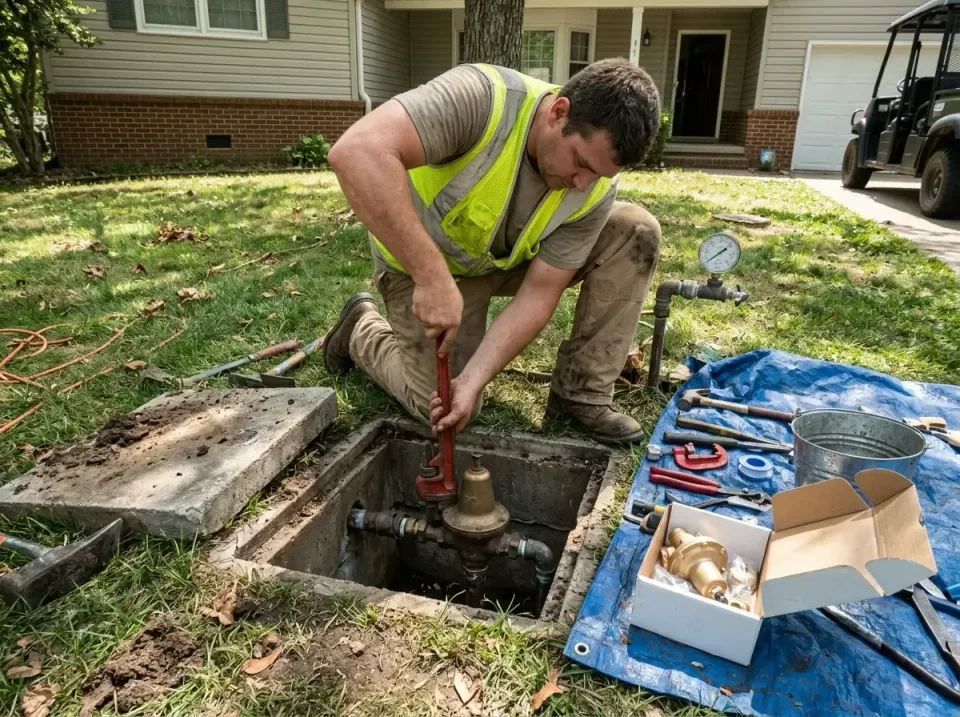
A pump can run but still fail to deliver water effectively. A submersible well pump with stainless-steel housing sits down in the well, where its construction is suited to continuous contact with water; damage or wear still needs diagnosis rather than guesswork. If testing points to a failed pump, we check the existing system and fit before discussing replacement options.
A booster pump serves a different purpose: it increases pressure in a system that needs an added lift, rather than repairing a failing well pump. Installing one before confirming the source can add equipment without addressing the original fault.
International brand pump compatibility matters too; matching a replacement to the existing electrical and plumbing setup helps avoid a poor fit. We explain what the measurements show in plain language. No speculative swaps.
When should you call instead of troubleshooting?
Homeowners can note the pump’s cycle pattern and check whether obvious water use is continuing, but electrical testing and opening pump controls are not safe DIY steps. If the breaker trips, the pump makes unusual sounds, or water service becomes unreliable, stop adjusting equipment and arrange a professional inspection. A wet basement or exposed wiring makes the decision clearer: keep away from the electrical components.
Our well system service starts by checking how the pump responds, then follows the evidence through the system. We look at the motor’s electrical readings and inspect accessible components before recommending a repair.
If the home’s pressure issue appears at a fixture rather than throughout the system, tracking where it occurs helps avoid unnecessary pump work. Readers seeing a pressure gauge swing sharply can also review what a sharply swinging pressure gauge can reveal about your well.
What should a Vermont homeowner track?
Write down when the pump starts, how long it runs, and whether the pattern occurs when all taps are closed. Include changes in flow at more than one fixture and any recent work near the well or water lines. This simple record gives a plumber useful context and can distinguish a system-wide problem from one isolated tap.
Mountain elevations receive heavier snowfall, which can complicate access to some properties during service visits. Keep the path to the well and utility area clear when conditions allow, and tell us about access limits when scheduling.
For related pressure symptoms, see why shower pressure drops when the toilet flushes in Vermont. We diagnose before replacing parts, protect the work area, and keep customers updated on timing.
Which Diagnosis Fits a Cycling Pump?
The right starting point depends on whether your home draws from a public main or a private well, and whether the pressure problem is system-wide or local. Ice storms can disrupt power to well pumps, so note any outage before assuming a mechanical failure. A pump recommendation should also be sized to the actual water demand, not chosen by guesswork.
| Option | Best for | Key detail |
|---|---|---|
| Municipal supply diagnosis | Pressure trouble on a public main | First identify the water source |
| Private well diagnosis | Repeated pump starts at a well-served home | Check controls and pump operation |
| Pressure tank replacement | Cycling linked to poor water storage | Capacity is model-specific |
| Booster pump installation | Confirmed need to raise system pressure | Right-sized equipment matters |
| Water line leak repair | Suspected water loss between well and home | Isolate the leak before replacing components |
A submersible electric pump has a long history: Arutunoff’s development in 1928 helped establish the technology used in modern wells. That history does not diagnose a present-day failure; testing does.
How Should You Prepare for a Pump Check?
If the pump keeps restarting and the utility area is hard to reach, prepare the work space before the visit. Spring snowmelt can saturate basements and well areas, so mention muddy or wet access when arranging service.
-
Confirm the water source: Tell the plumber whether the home uses a private well or municipal supply.
-
Clear the route: Make room to reach the basement, utility area, and well-pump electrical controls; accessible controls help the technician inspect the system efficiently.
-
Plan parking: Confirm parking near the service entrance so tools and diagnostic equipment can be brought in safely.
-
Note the symptoms: Record how often the pump starts and which fixtures show weak flow.
-
Coordinate access: Let affected occupants know if water may need to be shut off during testing.
Pump design has roots in the Archimedes screw tradition, but today’s well equipment requires modern, system-specific checks. Armais Arutunoff’s role as an electric submersible pump pioneer explains the development of submerged pumping; it is not a reason to handle pump wiring yourself. Ask what will be tested before repair begins.
Get a Clear Answer on Repeated Pump Starts
A well pump that starts every few minutes deserves a system check, especially if flow is fading or the pump is running when no water is being used. Cold, snowy winters increase frozen-pipe risk, and exposed plumbing can add another problem to diagnose before temperatures drop. Keep notes on the cycle pattern and avoid opening electrical controls.
Our Vermont-licensed master plumber and Vermont-licensed journeyman plumbers explain findings before recommending work. For appropriate jobs, we provide code-compliant scope documentation so you can understand what work is proposed.
From homes near the Vermont State House in Montpelier to rural properties, we focus on the cause rather than a quick parts swap. Contact Vermont Plumbing Pros at (877) 773-0781 or arrange well pump repair to discuss the symptoms and next steps.