Why Do Burlington Second-Floor Taps Barely Run?
When second-floor taps barely run, first check whether the problem affects one fixture or every faucet upstairs. A weak stream from several taps points toward a supply restriction or a pressure problem that needs diagnosis, not just a new showerhead.
Start with the easy checks. Remove buildup from the faucet aerator, make sure its shutoff valves are open, and compare its flow with a nearby first-floor tap.
A check valve that sticks or fails to open fully can restrict water reaching upper fixtures, so don’t force or dismantle one without knowing the system. For Burlington VT homes, note when the flow changes and whether other fixtures are running.
Near ECHO, Leahy Center for Lake Champlain, Burlington, local service calls still start with testing the home’s actual plumbing. Cold, snowy winters increase frozen-pipe risk, so a sudden change after a cold spell deserves attention.
Could a small fixture restriction explain the weak flow?
If only one upstairs faucet trickles, begin at that fixture; if several taps are weak, look upstream instead. Clean the aerator and check that the fixture’s shutoff valves are fully open.
A clogged aerator can slow one outlet, but it cannot explain weak flow at multiple taps across the second floor. Simple distinction.
At homes around the University of Vermont, Burlington, we compare affected and unaffected fixtures before recommending a repair, rather than treating every weak tap as a pump problem. Burlington’s variable water conditions make that whole-system check worthwhile.
If the shower alone is affected, inspect its head and handle for scale or a partly closed valve; don’t replace a line based on one fixture’s flow.
What does a pressure diagnosis reveal upstairs?
A diagnosis compares pressure and flow at more than one point, then checks whether the symptoms change when another fixture runs. That difference matters: a normal reading with fixtures closed but a sharp drop during use can point to a restriction or supply issue that a single static reading misses.
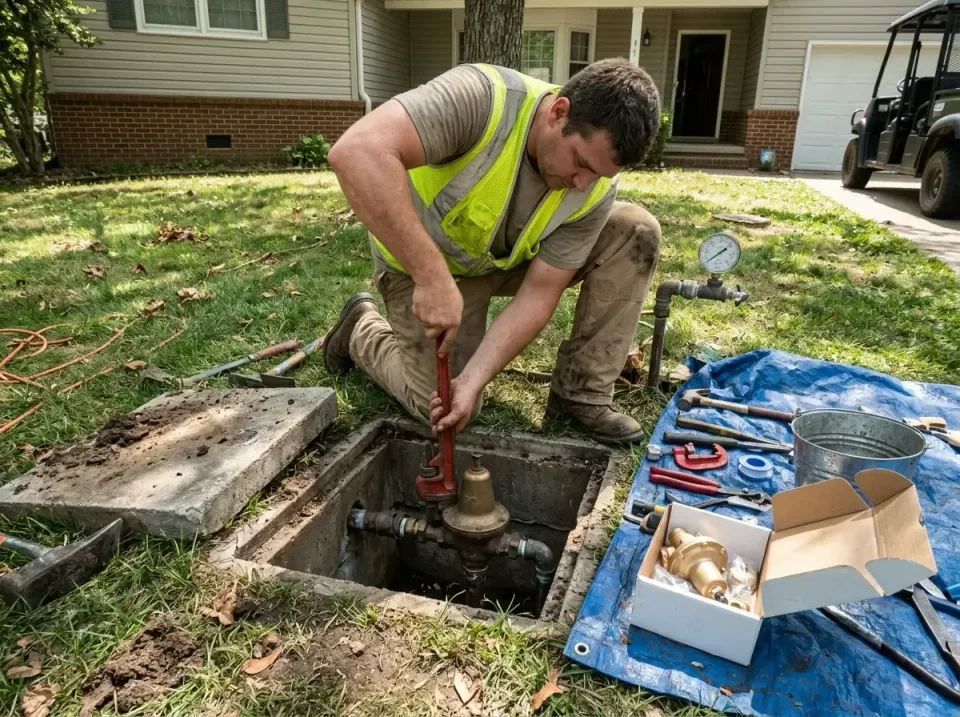
Our Vermont-licensed master plumber-led crew checks the pressure response and the route serving the affected taps before discussing repairs. Leave the basement or utility-room area accessible so the technician can reach the plumbing and equipment without moving stored items.
Near Champlain College, Burlington, older and newer plumbing layouts alike call for tracing the actual route rather than assuming the upper floor has a separate fault. Keep notes on which taps are affected and when the flow falls; those details help narrow the diagnosis.
Should you keep troubleshooting or call a plumber?
Cleaning an aerator and checking an accessible fixture valve are reasonable homeowner steps. Stop there if multiple second-floor taps remain weak, pressure changes suddenly, or you see a leak.
Avoid adjusting concealed valves or opening equipment you cannot identify; a wrong change can interrupt water or create a leak that costs more to repair. We explain what testing shows in plain language and discuss the likely repair before doing the work.
Around Church Street Marketplace, Burlington, discreet in-home service means keeping the work area orderly and explaining access needs before we begin. If the home has no water or a worsening leak, treat it as an emergency and seek help rather than repeatedly cycling equipment.
A licensed plumber can investigate the supply path and fixture connections without guessing at a replacement.
Which Burlington repair path fits the evidence?
The right repair depends on where the flow drops. A fixture-specific restriction calls for work at that outlet; weak flow across several upstairs taps calls for checking shared piping or the incoming supply.
We begin with diagnosis, then explain the finding and the available repair path before replacing parts. If a nearby property is served by Interstate 89 access routes, that road is simply a travel reference not a reason to skip careful testing once we arrive.
Burlington homes can have different layouts and supply arrangements, so the water source and affected fixtures matter more than the address alone. For a broader look at the process, read our Water Pressure Diagnosis page.
If you also notice a shower’s stream changing when a toilet runs, our guide to why shower pressure drops when the toilet flushes covers that related symptom.
Which Repair Option Fits Weak Upstairs Flow?
The pattern helps distinguish a fixture issue from a supply problem; testing identifies which option fits rather than guessing from the second-floor symptom alone.
| Option | Best for | Key detail |
|---|---|---|
| Fixture-flow repair | One tap or shower runs poorly | Branch lines commonly measure 1/2–3/4 inch; check the outlet and valve first. |
| Municipal supply diagnosis | Several fixtures are weak in a public-supply home | Compare pressure and flow at more than one fixture. |
| Private well diagnosis | Upper taps weaken in a well-served home | The well pump and pressure equipment need to be assessed as a system. |
| Regulator repair | Flow problems suggest the incoming pressure is being restricted | Regulator connections commonly measure 3/4–1 inch. |
| Booster pump installation | Diagnosis shows a need to raise pressure | A booster raises pressure; it should not be used to mask an unresolved restriction. |
A call near Route 100 Scenic Byway is still planned around the home’s needs, not the road name. If a true no-water emergency occurs, describe the symptoms when seeking emergency plumbing. If you are near Otter Creek Falls, Middlebury, mention the property’s location when arranging service so access can be coordinated.
How Do You Prepare for an Upstairs Flow Check?
If the upstairs sink barely trickles while the first floor seems normal, record which fixtures are affected before arranging a visit. That comparison helps us focus the inspection. Keep it simple.
-
Identify the supply: Note whether the home uses municipal water or a private well, since the equipment and checks differ.
-
Record the pattern: Write down which upstairs taps are weak and whether flow changes during other water use.
-
Clear the work area: Make the basement or utility-room equipment reachable and keep household items away from the service path.
-
Plan access: Share arrival or parking details and arrange any needed water shutdown with other occupants.
-
Ask for an estimate: Request the expected diagnostic work and repair options before approving replacement parts.
Cold, snowy winters increase frozen-pipe risk, so tell the plumber if weakness began after freezing weather. If discarded PVC and PEX pipe is present from earlier work, point it out rather than assuming it is suitable for reuse. A trip near Amtrak Brattleboro Station or Billings Farm & Museum, Woodstock does not change the plumbing check; Hildene, Manchester is another location detail that can help coordinate the visit.
Ready to Fix Barely Running Second-Floor Taps?
A single slow faucet may need a simple fixture check; several weak upstairs taps call for tracing the shared supply. Take note of which fixtures are affected and whether the flow changes during use.
That gives the plumber a useful starting point. Ice storms can disrupt power to well pumps, so homes on a private supply should mention any recent outage rather than assuming the taps alone are at fault.
Near Lake Willoughby or elsewhere in Vermont, a licensed plumber can check the system and explain what the findings mean before repair work begins. Vermont Plumbing Pros can help identify the likely cause and discuss a practical next step.
Request Water Pressure Diagnosis for a measured assessment, or call (877) 773-0781 to talk through the symptoms.